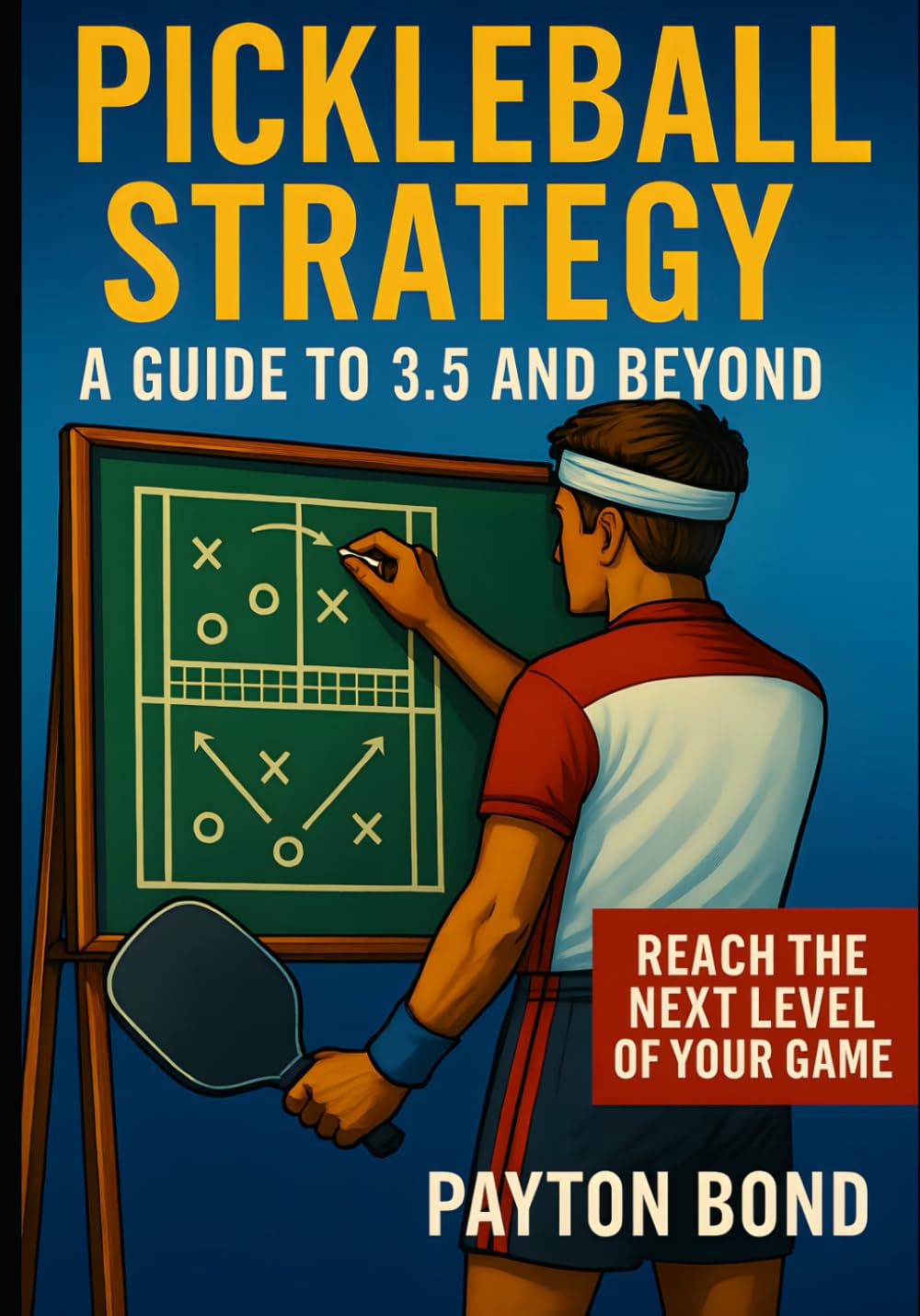

Smart positioning can make or break your pickleball doubles game. If you’re tired of losing winnable points and want to start controlling matches through better court awareness, this guide breaks down the positioning strategies that separate winning teams from struggling partnerships.
This strategic playbook is designed for intermediate players who understand the basics but want to elevate their doubles game through smarter positioning and tactical awareness.
We’ll cover how to master court positioning for doubles dominance, focusing on when to move forward, when to stay back, and how to move as a coordinated unit. You’ll also learn to perfect your serving and third shot strategy to gain early control of points, plus develop winning volley techniques that keep opponents pinned at the baseline. Finally, we’ll explore how to exploit strategic shot placement and avoid the critical doubles mistakes that cost matches.
Master Court Positioning for Doubles Dominance

Return and Sprint to the Non-Volley Zone Line
The foundation of effective doubles positioning pickleball begins with your return strategy. As the returner, your primary objective must be reaching the non-volley zone (NVZ) line after every return shot. This critical movement separates winning doubles teams from those struggling to maintain control.
Execute your return shot deep into your opponents’ court, then immediately sprint forward to join your partner at the NVZ line. This quick transition from the baseline to the non-volley zone is non-negotiable in competitive doubles play. The deeper your return, the more time you’ll have to complete this forward movement safely. Make this transition automatic – hit deep and sprint forward every single time without exception.
Move as a Coordinated Unit with Your Partner
Successful pickleball doubles strategy relies heavily on synchronized movement between partners. You and your teammate must function as a coordinated unit, moving together across the court rather than operating as two independent players. This unified approach creates a defensive wall that’s difficult for opponents to penetrate.
When one partner moves left or right to cover a shot, the other must mirror this movement proportionally. This synchronized positioning ensures you’re always working together to cover the court effectively, eliminating gaps that opponents can exploit through strategic shot placement.
Maintain Equal Distance Between Partners
Proper doubles court positioning requires maintaining consistent spacing between you and your partner. Equal distance between partners creates optimal court coverage while preventing your opponents from finding easy targets through the middle of your formation.
This equal spacing principle applies whether you’re both at the NVZ line, both at the baseline, or in transition. The distance should remain relatively constant as you move as a unit, ensuring neither player becomes overextended or leaves their partner vulnerable to attack.
Avoid the Island of Despair Formation
The most devastating positioning error in pickleball doubles tactics is the “island of despair” formation. This occurs when one partner advances to the NVZ line while the returner becomes stranded halfway back from the baseline, creating a dangerous gap in your court coverage.
This formation hands the serving team a significant advantage, as the gap between partners provides ample space for opponents to move forward and seize control of the point. The stranded partner becomes isolated and vulnerable, while the advanced partner cannot effectively cover the entire front court alone. Always complete your transition to the NVZ line together to avoid this tactical disaster.
Perfect Your Serving and Third Shot Strategy

Serve and Stay Behind the Baseline
After you serve, freeze behind the baseline until you play your third shot to prevent backpedaling, rushing, or faulting. This fundamental principle of pickleball doubles strategy establishes proper court positioning and sets up your team for success. Many players make the critical error of moving forward immediately after serving, which disrupts their timing and positioning for the crucial third shot. By maintaining your position behind the baseline, you create a stable foundation that allows you to properly assess the return and execute your next shot with precision.
The baseline position gives you the time and space needed to read the opponent’s return while maintaining balance. This patient approach prevents the common mistakes of rushing forward prematurely or getting caught in awkward positions between the baseline and the non-volley zone. Your stability behind the baseline directly impacts the quality of your third shot, which is often the determining factor in winning or losing the point.
Target Your Third Shot to the Moving Returner
Always send your third shot to the moving player, the returner, as their movement often leads to mistakes. This strategic targeting is a cornerstone of effective pickleball doubles tactics that exploits the natural vulnerability created by movement. When the returner is shifting their weight, changing direction, or still completing their return motion, they’re in their most unstable position on the court.
The moving returner typically has less time to set up for their next shot and is more likely to produce a weaker response or commit an unforced error. By consistently directing your third shot toward this player, you’re putting pressure on their weakest moment while simultaneously avoiding the more stable, stationary player at the net. This tactical approach maximizes your chances of creating advantageous situations and potentially winning the point outright.
Choose Deep Serves Over Power Serves
Prioritize deep serves targeting the baseline, emphasizing placement and patience over pure power. This approach to serving represents a sophisticated understanding of pickleball third shot strategy that focuses on creating favorable conditions for the upcoming rally. Deep serves push the returner back, giving them less court to work with and reducing their ability to hit aggressive returns that could put your team on the defensive.
The emphasis on placement over power allows for greater consistency and control, which are far more valuable in doubles play than occasional aces. Deep serves create longer return distances, giving you more time to prepare for your third shot while forcing the opponent to generate their own pace. This strategic serving approach sets up the entire point in your favor, making subsequent shots easier to execute and increasing your overall win percentage.
Use Third Shot Drops to Neutralize Opponents
Employ third shot drops to neutralize opponents and gain control of the rally. The third shot drop is perhaps the most critical skill in winning pickleball doubles, as it transitions your team from a defensive position to an offensive one. This soft, controlled shot lands in the opponent’s non-volley zone, forcing them to hit upward and giving you the opportunity to advance to the net.
The neutralizing effect of a well-executed third shot drop cannot be overstated. It eliminates the opponent’s ability to attack while creating an opening for your team to establish net position. This shot requires precision and patience, but when executed properly, it shifts the momentum of the point in your favor and sets up numerous strategic advantages for the remainder of the rally.
Develop Winning Volley Techniques

Execute Compact Punch Volleys at Opponents’ Feet
The foundation of effective doubles volley techniques lies in mastering the compact punch volley aimed directly at your opponents’ feet. This strategic shot serves a dual purpose in winning pickleball doubles: it forces your opponents to hit upward from an uncomfortable position while simultaneously preventing them from maintaining their advantageous position at the non-volley zone line.
When executing these punch volleys, focus on compact, controlled movements rather than large, sweeping motions. The goal is precision over power. By targeting your opponents’ feet consistently, you create defensive situations that often result in weak returns or outright errors. This tactical approach disrupts their offensive rhythm and keeps them from establishing themselves in optimal court positioning.
Maintain Active Ready Stance with Backhand Bias
Your stance at the kitchen line forms the backbone of successful doubles volley techniques. An active ready stance requires your weight positioned forward on the balls of your feet, with your paddle held out in front of your body. This forward positioning protects your core while enabling quick reactions to incoming shots.
Crucially, prepare with a backhand bias since the majority of volleys in doubles play will come to your backhand side. This preparation allows for faster reaction times and more consistent volley execution. Keep your paddle positioned slightly toward your backhand side while maintaining the ability to quickly adjust for forehand volleys when necessary.
Keep Your Paddle Square to Avoid High Returns
Paddle face control represents one of the most critical elements of winning pickleball doubles tactics. Maintaining a square paddle face during volleys prevents the ball from sailing high, which would give your opponents easy offensive opportunities. An open paddle face is one of the most common technical errors that leads to defensive breakdowns.
When your paddle face opens during contact, the ball trajectory becomes too high, allowing opponents to maintain their aggressive positioning and potentially set up attacking shots. Focus on keeping the paddle face perpendicular to the court surface through contact to ensure controlled, downward ball placement.
Stay Planted at the Kitchen Line Unless Absolutely Necessary
Court positioning discipline separates successful doubles teams from those who struggle with consistency. Once you’ve established yourself at the non-volley zone line, resist the temptation to retreat unless absolutely necessary. Casually giving up this prime court position undermines your strategic advantage and hands control back to your opponents.
The only circumstances that warrant retreating from the kitchen line include defending against pop-ups or when faced with an overhead attack. Even in these situations, work to quickly re-establish your position at the line once the defensive play is complete. This positioning discipline maintains pressure on your opponents and keeps you in the optimal location for executing winning doubles volley techniques.
Exploit Strategic Shot Placement

Target Your Opponent’s Backhand Foot During Dinks
Mastering the art of strategic shot placement begins with understanding your opponent’s vulnerabilities during the dinking exchange. When engaged in the soft game at the non-volley zone, consistently targeting your opponent’s backhand foot creates a significant advantage in your pickleball doubles strategy. This precise placement forces your opponent to reach back farther with their paddle, disrupting their natural body mechanics and balance.
The backhand foot target is particularly effective because it creates an awkward hitting position. Your opponent must shift their weight and extend their reach, making it considerably more difficult to maintain control over their return shot. This mechanical disadvantage significantly increases the likelihood of generating a pop-up, which sets up your next strategic opportunity.
Hunt for Pop-Ups to Create Easy Putaways
Successfully implementing pickleball doubles tactics requires both partners to actively hunt for pop-ups throughout each rally. When your strategic foot targeting pays off and produces that coveted high ball, your team must be ready to capitalize immediately. The key lies in coordinated positioning where your partner anticipates these opportunities and positions themselves for a decisive punch volley.
This aggressive hunting mentality transforms defensive dinking exchanges into offensive opportunities. Rather than passively returning shots, winning pickleball doubles teams maintain constant pressure by seeking these elevated balls. When the pop-up appears, the ready partner can execute a controlled putaway, ending the point decisively while showcasing the power of smart targeting and coordinated pressure.
Emphasize Placement and Patience Over Power
Effective doubles positioning pickleball requires a fundamental shift in mindset from power-based play to precision-focused strategy. Smart shot selection and controlled placement consistently outperform aggressive power shots in competitive doubles play. This patient approach allows you to build points methodically while forcing opponents into increasingly difficult positions.
The emphasis on placement creates compound pressure throughout the rally. Each precisely placed shot limits your opponent’s options while simultaneously setting up your next strategic move. This controlled aggression proves far more sustainable and successful than attempting winners through sheer force, particularly in the nuanced exchanges that define high-level doubles play.
Aim Shots at Opponents’ Feet to Limit Their Options
Targeting opponents’ feet represents one of the most effective pickleball doubles tips for controlling rally tempo and limiting counterattack opportunities. Shots directed at the feet create awkward contact points that significantly reduce your opponent’s ability to generate offensive returns. This tactical approach forces opponents into defensive positions while maintaining your team’s strategic advantage.
Foot-level targeting works because it eliminates comfortable hitting zones and creates rushed decision-making. Opponents cannot comfortably attack from these positions, instead being forced into purely defensive returns that often result in favorable positioning for your team’s next shot.
Build Effective Partner Communication

Call Mine or Yours for Middle Court Balls
Effective pickleball doubles communication starts with clear ball responsibility calls. When balls come down the middle of the court, the split-second hesitation between partners can cost you the point. Establishing a clear verbal communication system eliminates confusion and ensures one player commits fully to every shot.
The key is making decisive calls early in the ball’s trajectory. As soon as you recognize a middle court ball approaching, immediately call “mine” if you’re taking it or “yours” if your partner should handle it. This pickleball doubles communication technique prevents the common scenario where both players go for the ball or, worse, both players assume the other will take it.
Practice this communication pattern during warm-ups and drilling sessions. The player with the better angle or positioning should typically take the shot, but having predetermined agreements about who covers which areas of the middle court streamlines decision-making during fast-paced rallies.
Signal Your Intended Serve Placement
Coordinated serving strategy requires advance communication with your partner about serve placement. Before each serve, use discrete hand signals or brief verbal cues to indicate where you plan to place the ball. This pickleball doubles strategy allows your partner to position themselves optimally for the anticipated return.
Common signaling methods include pointing discretely behind your back toward your intended target area or using simple verbal cues like “wide” or “body.” When your partner knows your serve placement, they can better anticipate the return direction and prepare for more aggressive net positioning or defensive coverage.
Announce Poaching Attempts in Advance
Successful poaching requires coordination between partners to avoid leaving court areas undefended. Before attempting to intercept your opponent’s shot, give your partner advance notice through verbal cues or predetermined signals. This pickleball doubles tactics approach ensures your partner can shift to cover the court area you’re vacating.
Effective poaching communication might include calls like “switch” or “I’m going” to alert your partner of your movement. The key is making this announcement early enough for your partner to react and adjust their positioning accordingly.
Share Strategic Adjustments During Play
Ongoing communication about strategic adjustments keeps your doubles team adaptive and responsive to changing match conditions. Between points, briefly discuss what’s working and what needs adjustment. Share observations about opponent weaknesses or patterns you’ve noticed during rallies.
These strategic discussions should be concise but specific, focusing on actionable adjustments like “let’s target their backhand” or “stay back on their serves.” This continuous communication loop enhances your winning pickleball doubles performance by ensuring both partners remain aligned on tactical approaches throughout the match.
Avoid Critical Doubles Mistakes

Stop Backing Off the Kitchen Line for No Reason
One of the most detrimental pickleball doubles mistakes is instinctively retreating from the non-volley zone line when you should maintain your position. Many players develop the habit of backing off the kitchen line after receiving a deep dink, creating unnecessary gaps in their court coverage. This retreat gives your opponents the perfect target at your feet, making you vulnerable to aggressive attacks.
When you back away from the kitchen line without a strategic reason, you surrender the most advantageous position on the court. The non-volley zone line is where you control the tempo and can execute winning shots. Maintaining this position allows you to take balls out of the air and keep pressure on your opponents.
Never Stay at Baseline After Returning Serve
The baseline trap is another critical error that undermines effective pickleball doubles strategy. As the returner, your primary objective after hitting the return of serve is to advance immediately to the non-volley zone line. Staying at the baseline leaves you exposed to third shot drops and puts you at a significant positional disadvantage.
Your journey from baseline to kitchen line must be decisive and swift. This forward movement is non-negotiable in doubles positioning pickleball, as it allows you to join your partner in the offensive zone and establish court control together.
Minimize Unforced Errors Through Smart Shot Selection
Unforced errors can devastate your doubles performance, often resulting from poor shot selection rather than opponent pressure. Smart shot selection involves choosing high-percentage shots that maintain rally consistency while avoiding unnecessary risks. Focus on consistent ball control rather than attempting spectacular winners that increase your error rate.
Developing patience in shot selection is crucial for winning pickleball doubles matches. Prioritize placement over power and maintain consistent contact points to reduce unforced errors significantly.
Prevent Overcommitting to One Side of the Court
Court balance is essential in doubles tactics, yet many teams fall into the trap of overcommitting to one side. This mistake leaves large areas of the court vulnerable and allows opponents to easily exploit the open space. Effective doubles court positioning requires both players to maintain proper spacing while covering their respective zones.
Avoid chasing every ball to one side of the court, which pulls both players out of position and creates defensive vulnerabilities.

Mastering pickleball doubles strategy isn’t about hitting harder or moving faster—it’s about playing smarter. By focusing on proper court positioning, perfecting your serving and third shot execution, developing solid volley techniques, and maintaining clear communication with your partner, you’ll immediately become a more effective player. The strategies covered in this guide, from controlling the non-volley zone line to strategic shot placement, work for players of all levels and ages because they emphasize fundamentals over flashy shots.
Success in doubles pickleball comes down to consistency, patience, and teamwork. When you implement these proven tactics—staying behind the baseline after serving, targeting the moving returner with your third shot, and maintaining your position at the kitchen line—you’ll transform from a casual player into the partner everyone wants on their side. Remember, smart positioning and strategic thinking will win more matches than raw power ever will. Start applying these techniques in your next game and watch your doubles performance improve dramatically.